Re-wilding the Inn
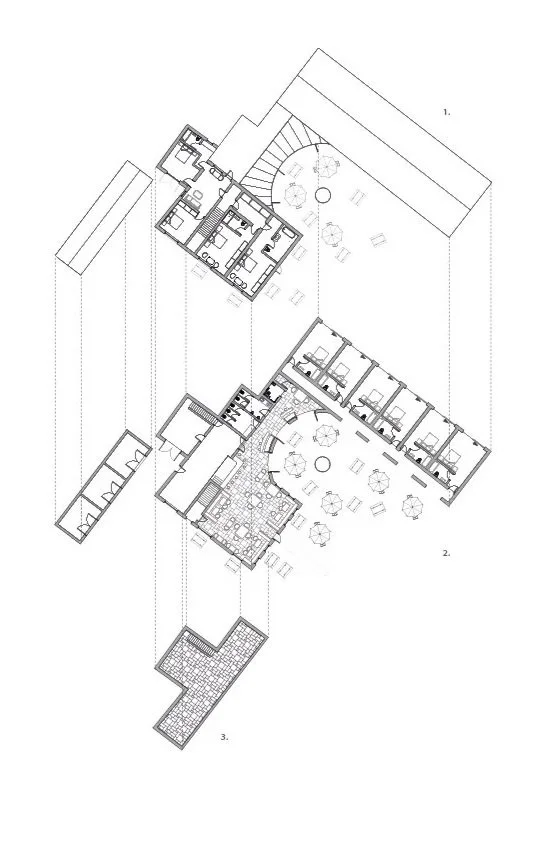
The project was developed as an early stage architectural study exploring a number of options for the future of a rural public house and inn, set within a broader consideration of landscape recovery and long term stewardship. Rather than fixing a single outcome, the work established a framework through which different degrees of retention, demolition and new construction could be assessed alongside opportunities to soften, repair and reanimate the surrounding land.
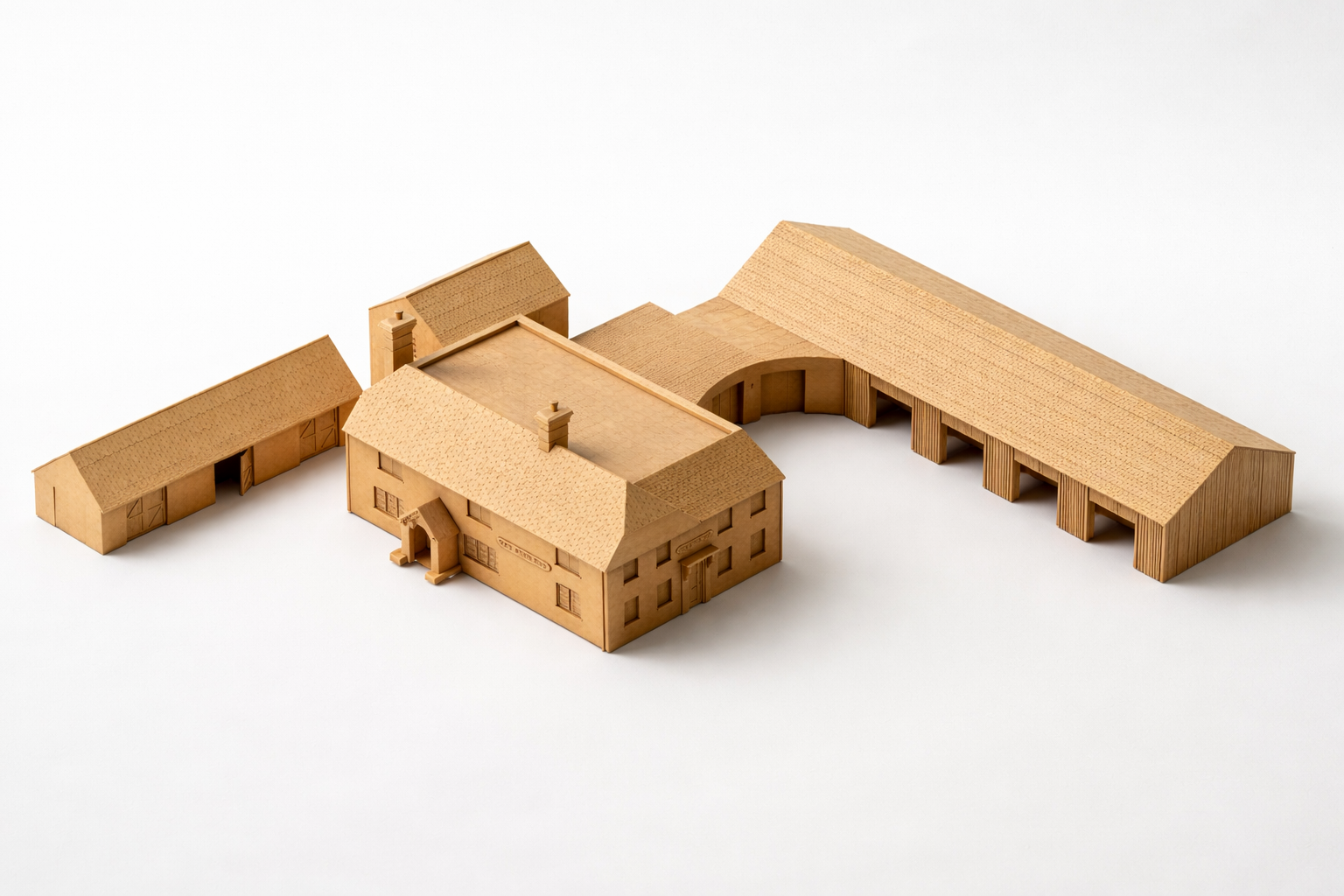
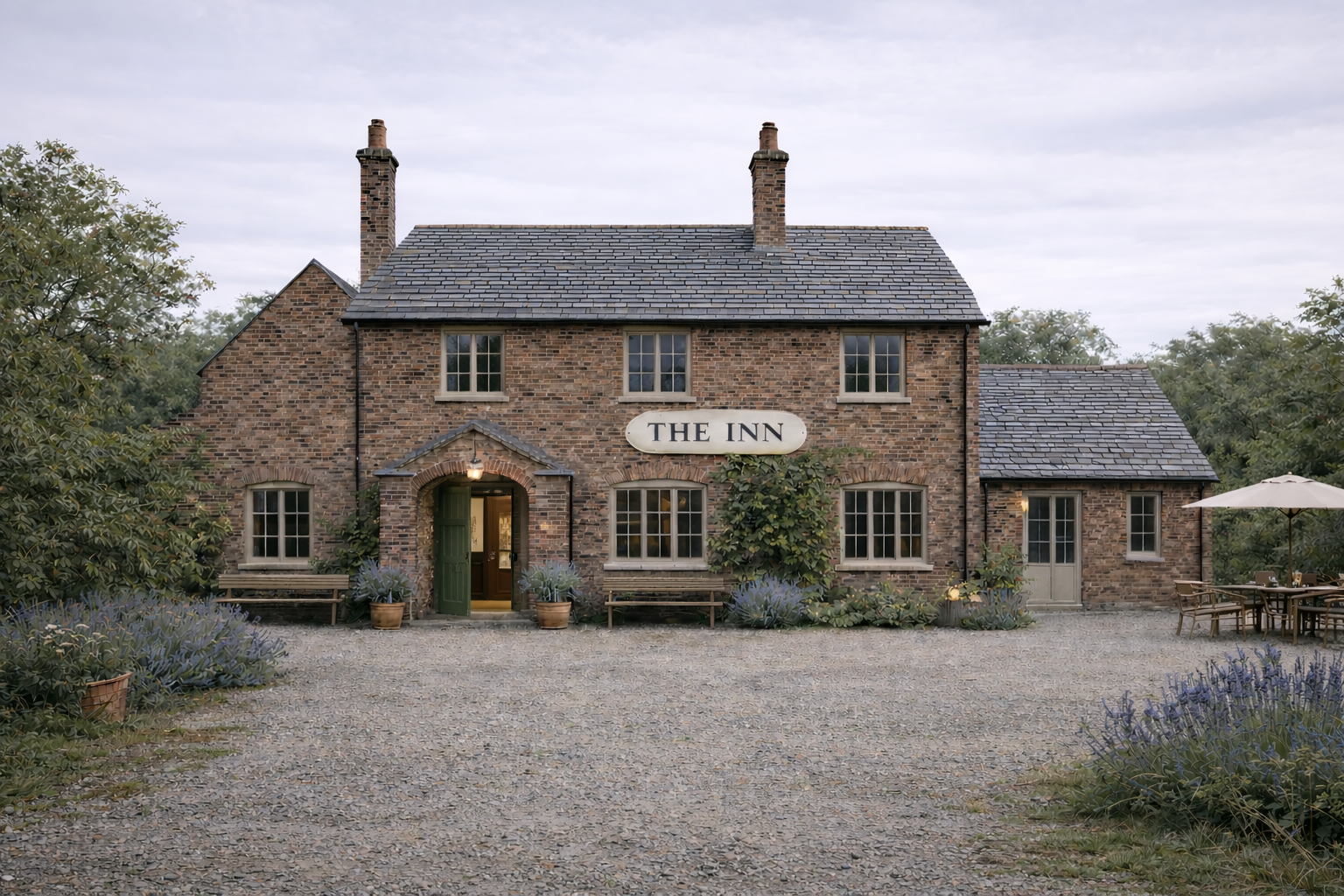
Each option was tested against the same architectural and environmental criteria. Key elements of the existing building were identified as carrying the greatest spatial and cultural value and were prioritised for retention across multiple scenarios. New accommodation and service spaces were proposed as simpler volumes, deliberately secondary to the principal building and its relationship to the landscape, allowing the site to read as a loose assembly rather than a singular object.
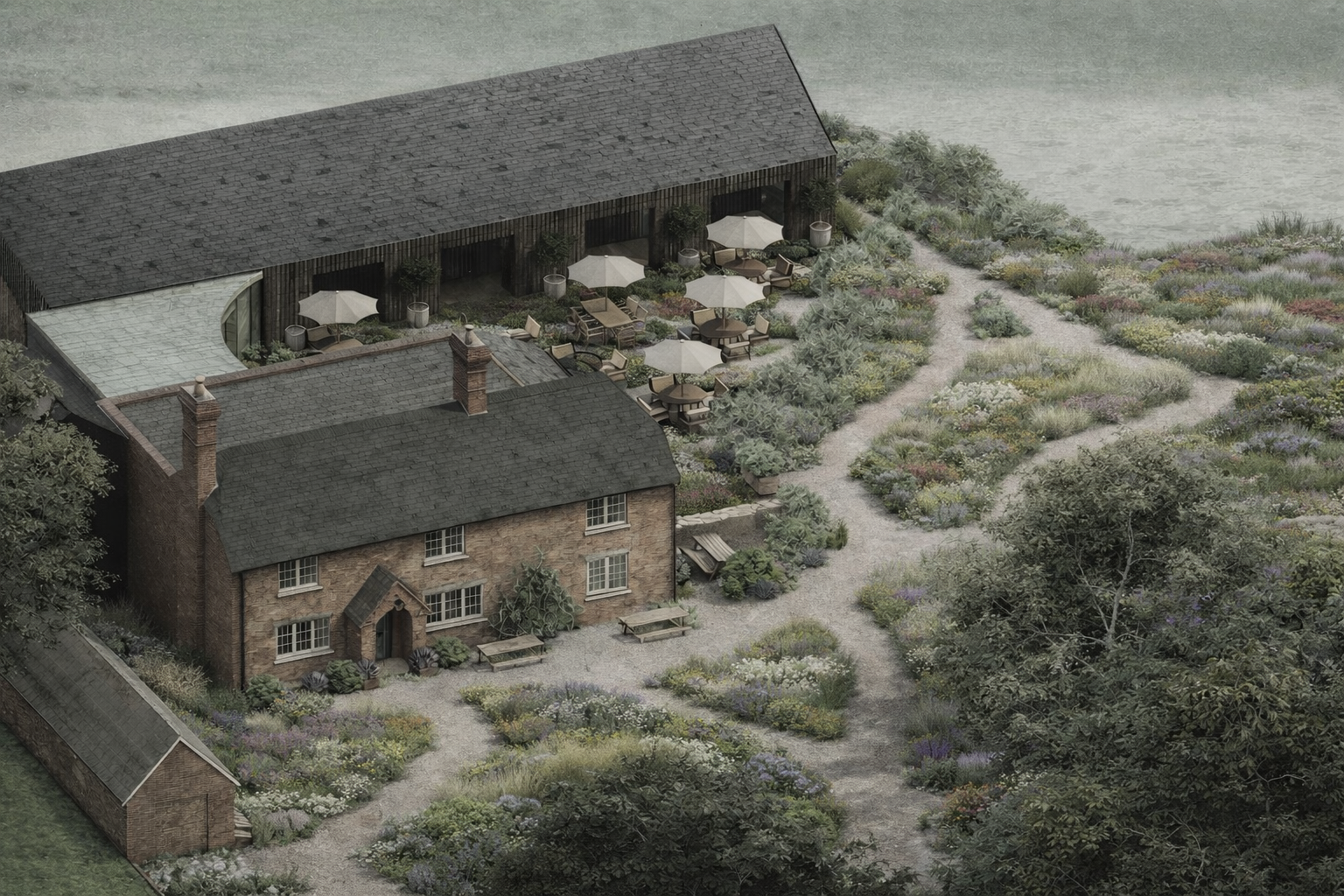
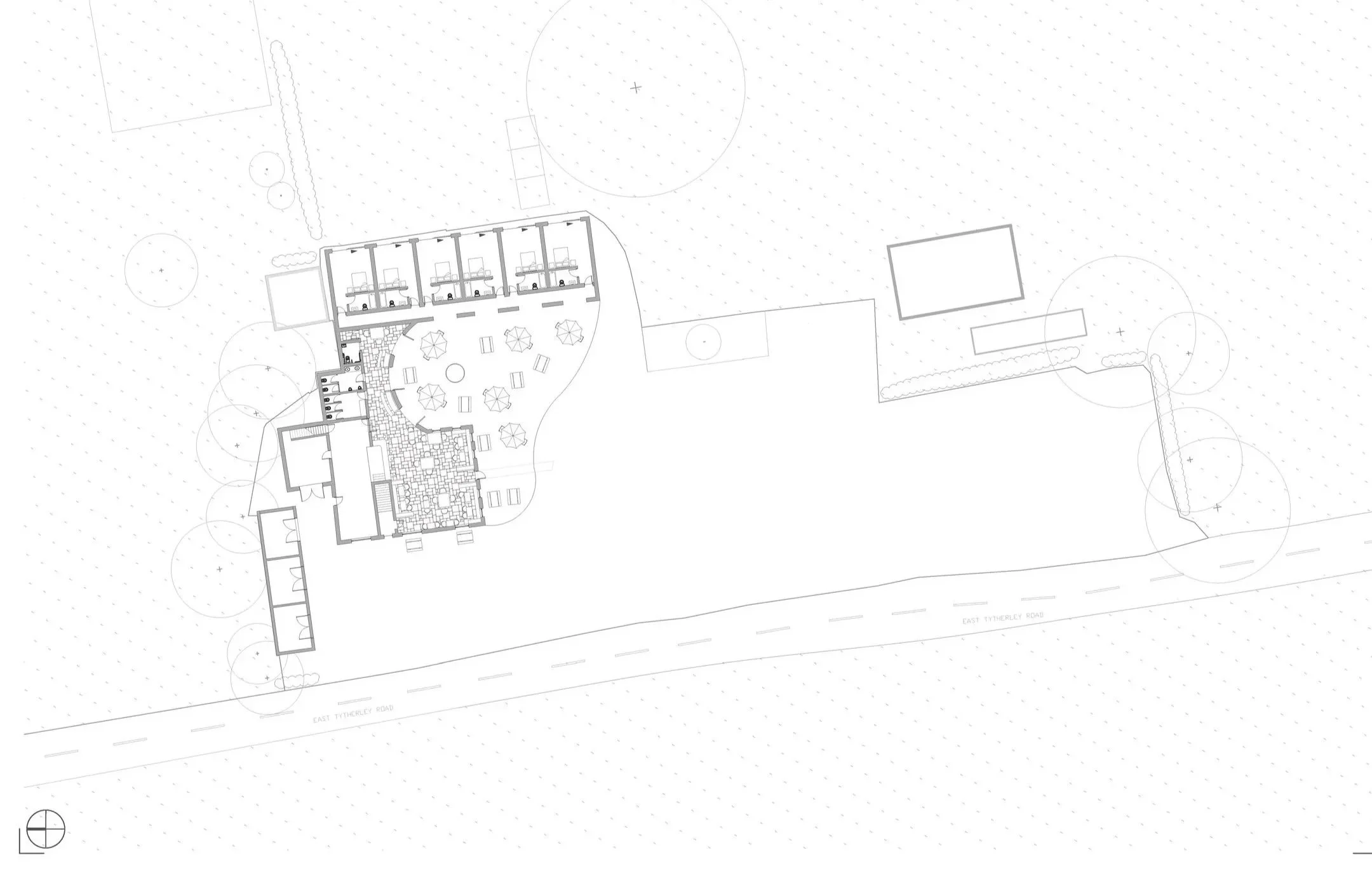
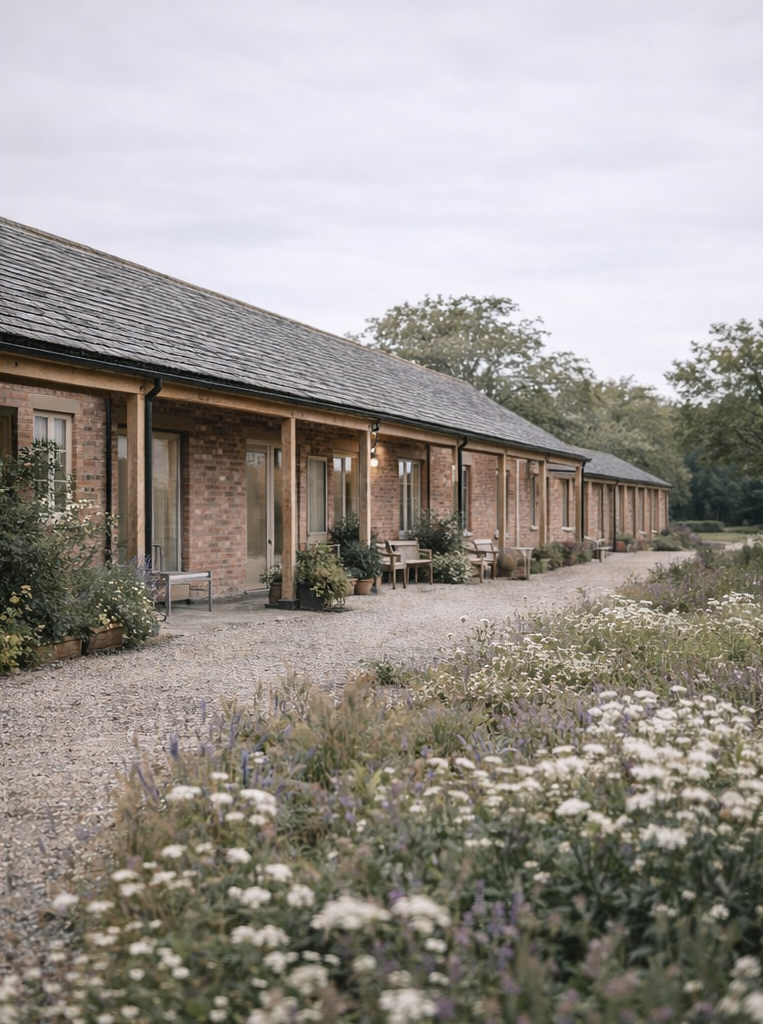
Arrival, access and circulation were examined with particular attention to accessibility and the organisation of public and private uses, but also to how movement might pass more gently through the site. A south facing courtyard and garden facing rooms were explored as consistent strategies for improving daylight and orientation, while allowing hard surfaces to give way to planted edges, informal paths and areas of low intervention planting that could evolve over time.
The study treated landscape not as a backdrop but as an active component of the project. Areas of former car parking and residual ground were reimagined as opportunities for meadow planting, scrub and informal garden spaces, encouraging biodiversity and seasonal change while maintaining clear routes and gathering spaces for visitors.
Early Passivhaus analysis informed the massing and envelope strategy of each option, allowing energy performance to be considered alongside architectural character and landscape ambition from the outset. The project was intended as a decision making tool, enabling an understanding of how architectural intervention, environmental performance and landscape recovery might work together to support a resilient and quietly productive rural setting.